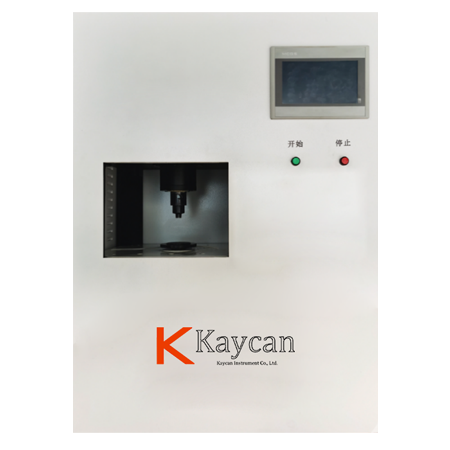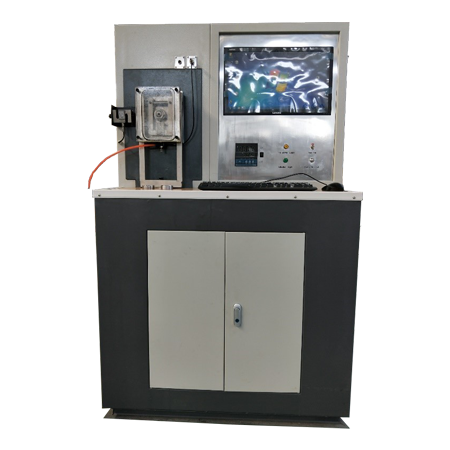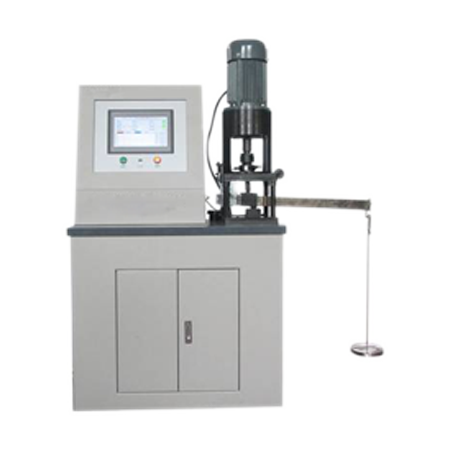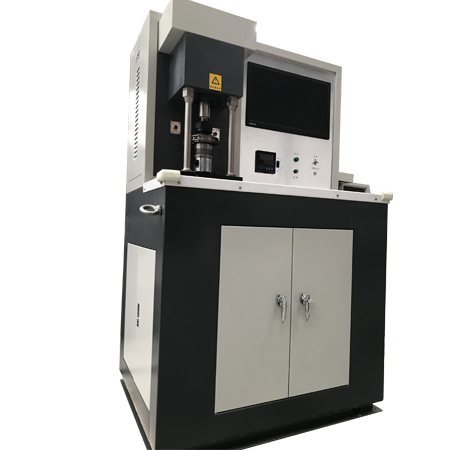

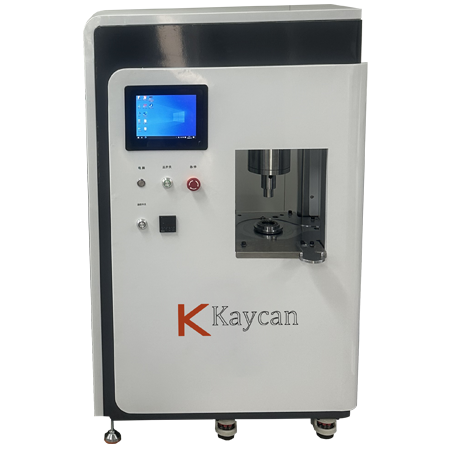
Benchtop Four Ball Wear Tester
Brand KN
Product origin Dalian,China
Delivery time deliver as soon as received payment
Supply capacity 30 sets one month
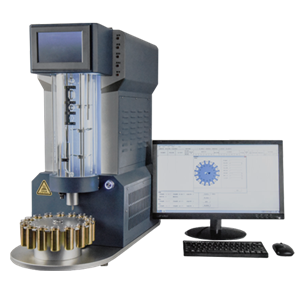
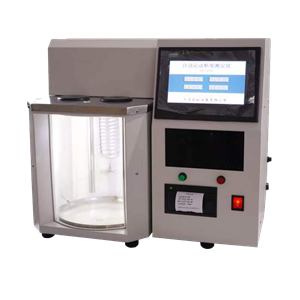
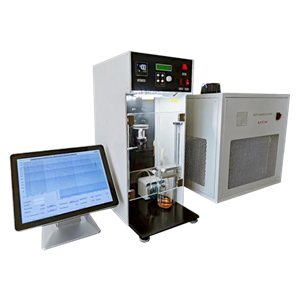
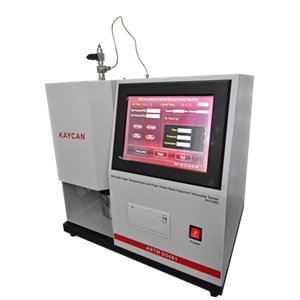
KN-2783P Automatic Four Ball Wear Tester is used to test the Wear Preventive (WP) and Extreme Pressure (EP) characteristics of greases and lubricating oils in sliding steel-on-steel applications. It conforms to the ASTM D2783, ASTM D2266, ASTM D2596,ASTM D5183, ASTM D4172, IP 239 and ISO 20623.The tester adopts sliding friction, under the high point contact pressure, to evaluate the carrying capacity of the lubricant. It includes the maximum no seizure load PB, sintering load PD and composite wear value ZMZ three items indexes. The tested is also used for the long-time abrasion resistance tests, to measure the friction coefficient.
KN-2783P Automatic Four Ball Wear Tester
Overview
KN-2783P Automatic Four Ball Wear Tester is used to test the Wear Preventive (WP) and Extreme Pressure (EP) characteristics of greases and lubricating oils in sliding steel-on-steel applications. It conforms to the ASTM D2783, ASTM D2266, ASTM D2596,ASTM D5183, ASTM D4172, IP 239 and ISO 20623.The tester adopts sliding friction, under the high point contact pressure, to evaluate the carrying capacity of the lubricant. It includes the maximum no seizure load PB, sintering load PD and composite wear value ZMZ three items indexes. The tested is also used for the long-time abrasion resistance tests, to measure the friction coefficient.
Technical parameters
1. Working environment requirements: Room temperature within 10–35°C; relative humidity not exceeding 80%; operating noise level ≤75 decibels.
2. Test force range (N): 5-10000 N. The testing machine applies a stable loading force, with full computer-controlled servo cylinder operation ensuring complete absence of impact or pulsation.
3. Loading method: Fully automatic servo electric cylinder electronic loading.
4. Method for reading scratch diameter: Automatic measurement via microscope or software (preferably using the CCD scratch measurement system).
5. Allowable error of test force:
1) When ≤4% FS, the reading error is ≤±2N and the reading repeatability is ≤2N.
2) When>4% FN, the relative indication error shall be ≤±0.5%, and the indication repeatability shall be ≤0.5%.
6. Test force retention: The test force shall be maintained for no less than 24 hours, with variations during this period ≤±0.5%FS.
7. Allowable error of friction force: The maximum allowable error for the testing machine's friction force reading is ±0.5%, and the maximum allowable error for reading repeatability is 0.5%.
8. Technical requirements for the spindle and servo loading device:
1) The radial circular runout of the test machine's spindle conical hole is ≤0.010 mm, with a maximum rotational speed of 3000 r/min.
2) The spring collet containing steel balls is mounted behind the conical hole of the testing machine's spindle, with the radial runout of the steel balls ≤0.015 mm.
3) The coaxiality error between the test machine spindle and the worktable oil reservoir shall be ≤φ0.150 mm.
4 The perpendicularity error between the test machine spindle and the horizontal plane of the worktable shall be ≤0.030 mm.
9. Technical Requirements for the Test Force Measurement System:
1) The testing force measurement system features a zero-setting function;
2) The force measurement system has a resolution of ≤0.01 N;
3 The discrimination threshold of the force measurement system is ≤0.01%FS.
4) Before use, preheat the testing machine for 30 minutes, ensuring that the zero point drift within this period is ≤±0.2%FS.
5) When the force applied by the testing machine is less than zero, the force indication device displays this value using a negative sign.
6) After the force is removed, the reading can return to the zero position, with a relative zero error of ≤±0.1%FN.
10. Technical Requirements for Friction Measurement Systems:
1) The friction measurement system can have a zero-setting function;
2) The measurement system for friction force has a resolution of ≤1 N.
3) The zero-point drift of friction force within 30 minutes is ≤±0.2%.
4) When the friction value of the testing machine is less than zero, the friction indicator displays this negative value.
5) After removing the friction force, the reading can return to the zero position, with a relative zero error of ≤±0.1%.
11. Technical requirements for the sample clamping device:
1) During the testing process, no relative sliding occurs between the conical hole of the testing machine spindle and the spring chuck, nor between the spring chuck and its internal steel balls.
2) During the test, the three steel balls inside the oil tank did not exhibit any relative movement or rolling.
3) Under the test force of 392N or 147N, after operating with the specified reference oil for 30 minutes, the difference between the average diameters of the three steel ball wear spots and the average diameter of any single steel ball wear spot shall be ≤0.04 mm
12. Technical requirements for timing display devices:
The testing machine is equipped with a timing display and control device that allows switching between display units in minutes and seconds. The timing is accurate, with a maximum allowable error of ±1/60 of the measured value. When the test duration exceeds the preset value, the spindle stops rotating immediately and displays the remaining test time.
13. Technical requirements for the spindle speed control and display device:
1) The maximum allowable error of the test machine spindle speed is ±3 rpm.
2) The testing machine is equipped with a control and display device for the spindle speed. When the spindle speed reaches the preset value, it automatically stops rotating.
14. Technical requirements for the fuel tank and heating device:
1) The oil tank and heating device can maintain tight contact with excellent insulation, ensuring an insulation resistance of no less than 50 MΩ under operating conditions.
2) The oil tank temperature rises from room temperature to 260°C within no more than 40 minutes; the actual heating time at-75°C does not exceed 10 minutes, and no oil leakage is observed in the tank.
3) When the oil tank temperature reaches 75°C, the variation within a 10-minute constant temperature period should remain within ±1°C.
15. Technical requirements for safety devices:
1) When the test force exceeds 2% to 10% of the testing machine's maximum capacity, the safety device will immediately activate, causing the machine to shut down automatically and trigger an alarm.
2) When the friction force exceeds the preset value, the safety device will trigger an alarm display, and the spindle will automatically cease rotation.
3) During sample sintering, the safety device can activate immediately, causing the main spindle to stop automatically.
16. Precision technical requirements:
1) Repeatability: Maximum non-card bite load: 15% of the mean value;
Sintering point: First-level load increment; Load-wear index: 17% of the mean value.
2) Reproducibility: Maximum non-grip load: 30% of the average value;
Sintering point: First-level load increment; Load-wear index: 44% of the average value.
17. Net Dimension: 800*530*1250mm
18. Weight: 150kg