-

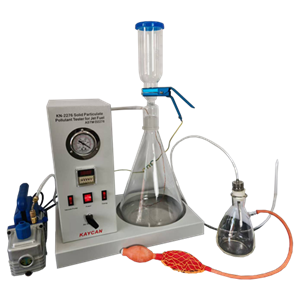
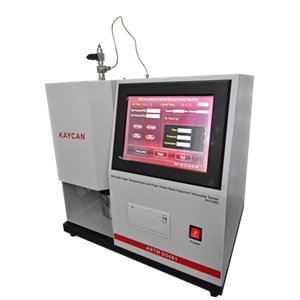
ASTM D2276 Particulate Contaminant In Aviation Fuel By Line Sampling
This tester provides a gravimetric measurement of the particulate matter present in a sample of aviation turbine fuel by line sampling. The objective is to minimize these contaminants to avoid filter plugging and other operational problems. Although tolerable levels of particulate contaminants have not yet been established for all points in fuel distribution systems, the total contaminant measurement is normally of most interest
Send Email Details -
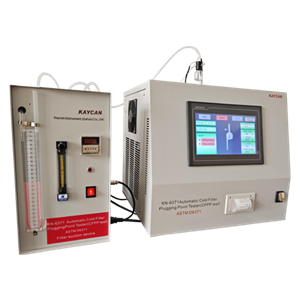
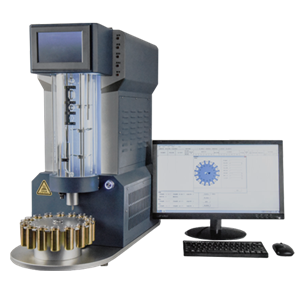
ASTM D6371 Automatic Cold Filter Plugging Point Tester(CFPP)
The CFPP of a fuel is suitable for estimating the lowest temperature at which a fuel will give trouble-free flow in certain fuel systems
Send Email Details -
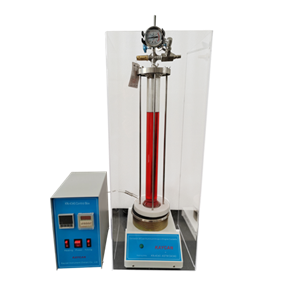
ASTM D4340 Corrosion Of Cast Aluminum Alloys In Engine Coolants
It is essential that engine coolants prevent heat-transfer corrosion of aluminum cylinder heads during engine operation. Any corrosion products formed may deposit on interior radiator surfaces, reducing heat-transfer efficiency of the radiator. Overheating and boil-over of the cooling system may then occur
Send Email Details -
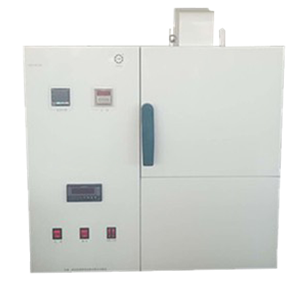
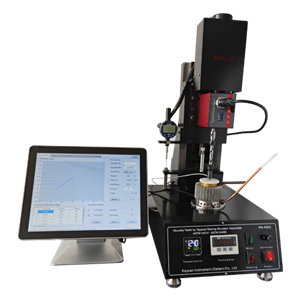
ASTM D4693 Low-Temperature Torque Tester
KN-4693 Low-Temperature Torque Tester conforms to ASTM D4693 Standard Test Method for Low-Temperature Torque of Grease-Lubricated Wheel Bearings. This test method covers the determination of the extent to which a test grease retards the rotation of a specially-manufactured, spring-loaded, automotive-type wheel bearing assembly when subjected to low temperatures. Torque values, calculated from restraining-force determinations, are a measure of the viscos resistance of the grease. This test method was developed with greases giving torques of less than 35N·m at 40℃
Send Email Details -
ASTM D1478 Low-Temperature Torque Tester
KN-1478 Low-Temperature Torque Tester conforms to ASTM D1478 Standard Test Method for Low-Temperature Torque of Ball Bearing Grease. This test method was developed using greases having very low torque characteristics at -54℃. Specifications for greases of this type commonly require testing at this temperature. Specifications for greases of other types can require testing at temperatures from -73℃ to -18℃. This test method has proved helpful in the selection of greases for low-powered mechanisms, such as instrument bearings used in aerospace applications. The suitability of this test method for other applications requiring different greases, speeds, and temperatures should be determined on an individual basis.
Send Email Details -
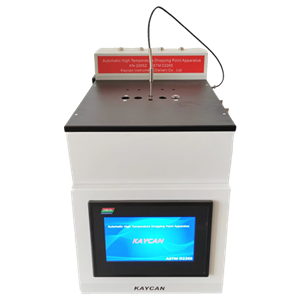
ASTM D2265 Automatic High Temperature Dropping Point Apparatus
KN-2265Z Automatic High Temperature Dropping Point Apparatus conforms to the ASTM D2265 Standard Test Method for Dropping Point of Lubricating Grease Over Wide Temperature Range. This apparatus covers the determination of the dropping point of lubricating grease and it tests dropping points of lubricating greases at temperatures of up to 400°C.
Send Email Details -
ASTM D8288 Automatic Tapping Torque Testing System
KN-8288 Automatic Tapping Torque Testing System conforms to ASTM D8288 Standard Test Method for Comparison of Metal working Fluids Using a Tapping Torque Test Machine. This test method can be used to predict the comparative lubricating properties of a metalworking fluid (MWF). Fluids that produce lower torques or higher efficiencies are predicted to have better machining characteristics. The method is applicable to all tap types, machining speeds, alloys and coatings that can be fabricated into a test piece. Comparison between different operating conditions or various types of fluids can be made. The reportable quantity is the efficiency or mean average torque of a reference fluid divided by the mean average torque of the fluid of interest.
Send Email Details -
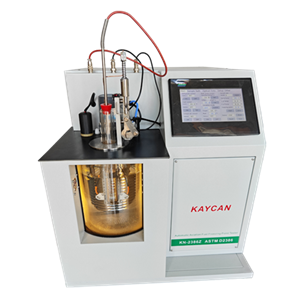
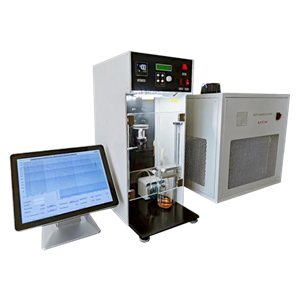
ASTM D2386 Automatic Freezing Point Of Aviation Fuel
The freezing point of an aviation fuel is the lowest temperature at which the fuel remains free of solid hydrocarbon crystals that can restrict the flow of fuel through filters if present in the fuel system of the aircraft. The temperature of the fuel in the aircraft tank normally falls during flight depending on aircraft speed, altitude, and flight duration. The freezing point of the fuel must always be lower than the minimum operational tank temperature
Send Email Details