-

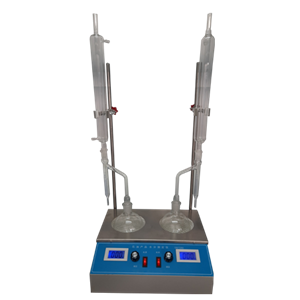
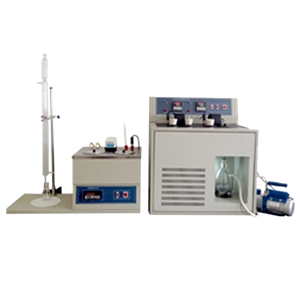
ASTM D4006 Water In Crude Oil By Distillation
The sample is heated under reflux conditions with a water immiscible solvent which co-distills with the water in the sample. Condensed solvent and water are continuously separated in a trap—the water settles in the graduated section of the trap, and the solvent returns to the distillation flask
Send Email Details -
ASTM D5853 Crude Oil Pour Point Tester
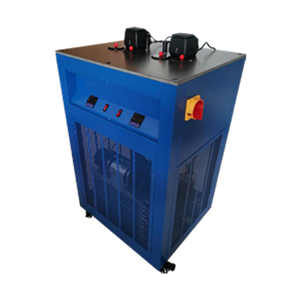
KN-5853 Curde Oil Pour Point Tester conforms to ASTM D5853 Standard Test Method for Pour Point of Crude Oils. After preliminary heating, the test specimen is cooled at a specified rate and examined a intervals of 3 celcius degree for flow characteristics. The lowest temperature at which movement of the test specimen is observed is recorded as the pour point.
Send Email Details -
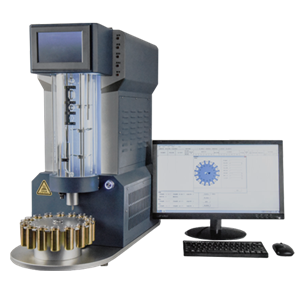
ASTM D6377 Apparatus for Vapor Pressure of Crude Oil
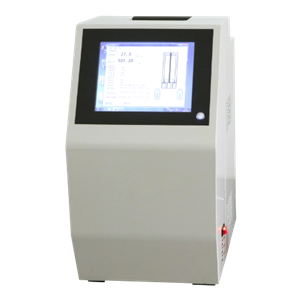
KN-6377 Apparatus for Vapor Pressure of Crude Oil conforms to ASTM D6377 Standard Test Method for Determination of Vapor Pressure of Crude Oil: VPCRX (Expansion Method). Employing a measuring chamber with a built-in piston, a sample of known volume is drawn from the sample container into the temperature controlled chamber at 20℃ or higher. After sealing the chamber, the volume produces the desired V/L value. The temperature of the measuring chamber is then regulated to the measuring temperature. After the temperature and pressure equilibrium, the measured pressure is recorded as the VPCRX of the sample. The test specimen shall be mixed during the measuring procedure by shaking the measuring chamber to achieve pressure equilibrium in a reasonable time of 5 to 30min. For results related to Test Method D323, the final volume of the measuring chamber shall be five times the test specimen volume and the measuring temperature shall be 37.8℃.
Send Email Details -
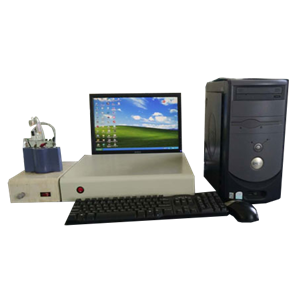
ASTM D3230 Salts In Crude Oil
KN-3230 Salt Content of Crude Oil Tester conforms to ASTM D3230 Standard Test Method for Salts in Crude Oil (Electrometric Method), it is suitable for the approximate chloride (salts) concentration in crude oil. The range of concentration covered is 0 to 500mg/kg or 0 to 150lb/1000bbl as chloride concentration/volume of crude oil. KN-3230 is suitable for measuring the salt content to detect the total halide value of which the range is 0.002~0.02%(weight) in the crude oil, reduced oil, cracking oil residue and fuel oil, it is also suitable for estimating the seawater pollution situation of the used team turbine oil and bunker fuel oil.
Send Email Details -
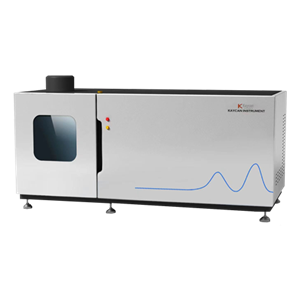
ASTM D5708 ICP for Crude Oils and Residual Fuels
When fuels are combusted, vanadium present in the fuel can form corrosive compounds. The value of crude oils can be determined, in part, by the concentrations of nickel, vanadium, and iron. Nickel and vanadium, present at trace levels in petroleum fractions, can deactivate catalysts during processing. These test methods provide a means of determining the concentrations of nickel, vanadium, and iron.
Send Email Details -
ASTM D6560 Apparatus for Paraffin, Resins and Asphaltenes Contents in Crude Oil
KN-6560 Apparatus for Paraffin, Resins and Asphaltenes Contents in Crude Oil in Crude Petroleum and Petroleum Products conforms to ASTM D6560 Standard Test Method for Determination of Asphaltenes (Heptane Insolubles) in Crude Petroleum and Petroleum Products and SY/T 7550 Determination of Paraffin, Resins and Asphaltenes Contents in Crude Oil. Asphaltenes are the organic molecules of highest molecular mass and carbon-hydrogen ratio normally occurring in crude petroleum and petroleum products containing residual material. They may give problems during storage and handling if the suspension of asphaltene molecules is disturbed through excess stress or incompatibility.
Send Email Details